
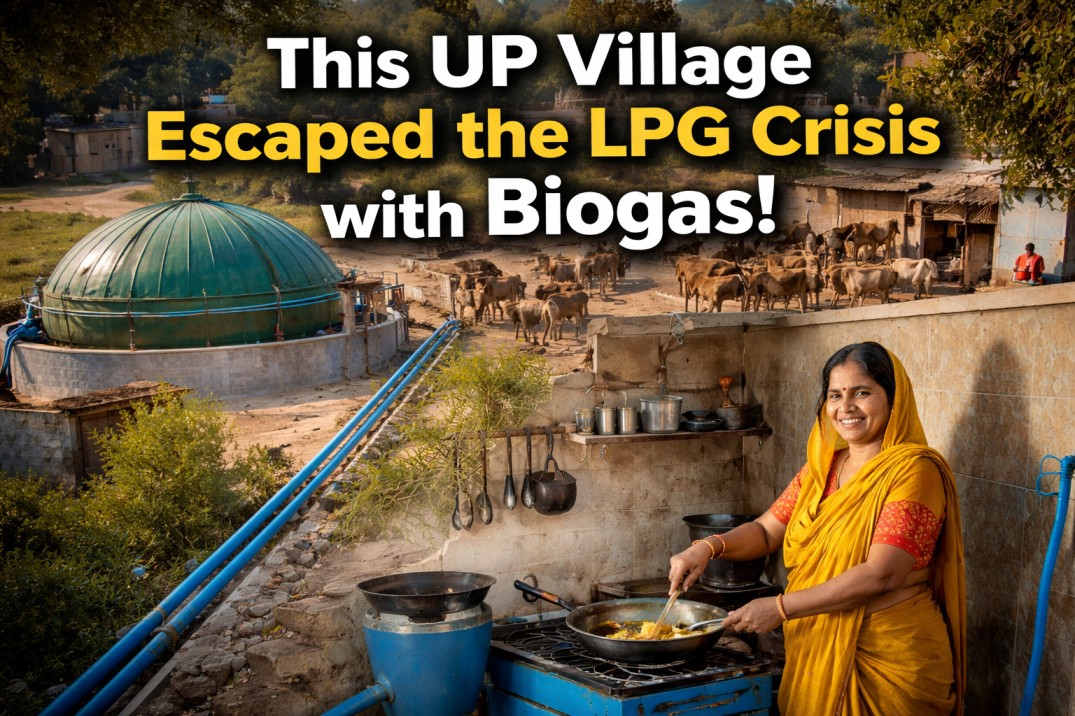
This UP Village Escaped the LPG Crisis: How 500 Residents Now Cook Using Biogas
As LPG prices continue to rise and gas shortages trouble many households across India, one small village in Uttar Pradesh has quietly found a smart and affordable solution.
Ekauni village in Chandauli district, near the Varanasi border, has become a powerful example of how rural India can reduce dependence on LPG cylinders.
While people in many cities and towns still stand in long queues for gas cylinders, families in this village receive cooking gas directly in their homes through pipelines.
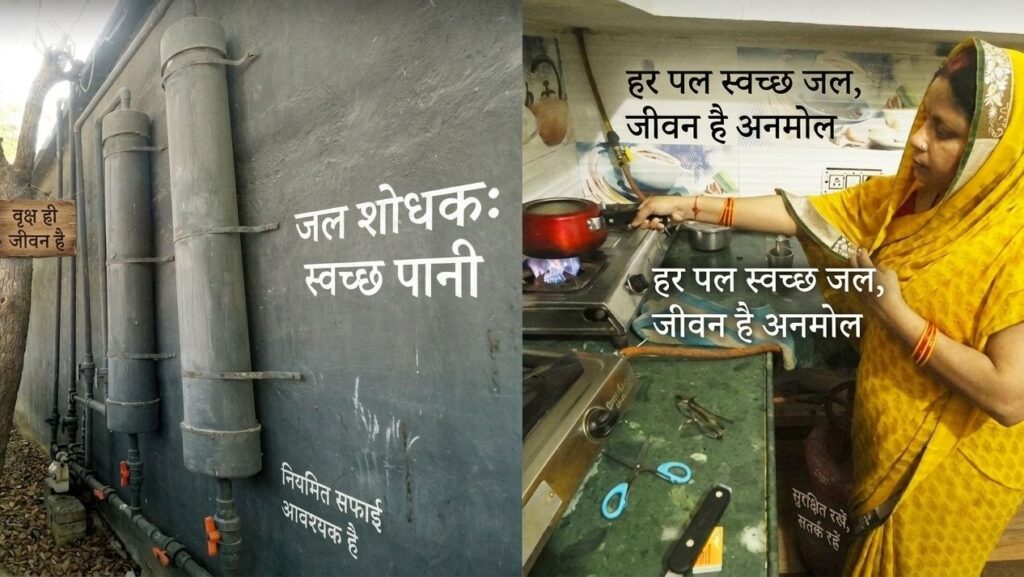
The fuel is not LPG.
It is biogas made from cow dung.
Since 2022, the 500 residents of Ekauni village have been using this low-cost fuel for cooking. The project has changed daily life for hundreds of families and helped them avoid the LPG crisis completely.
No Long Queues, No Cylinder Shortage
Every day, Pushpa Singh wakes up at 5:30 in the morning to prepare food for her family.
At exactly 6:30 am, gas begins flowing through a pipeline connected to her kitchen.
She quickly prepares breakfast and lunch before the supply stops at 9:00 am.
In the evening, the gas supply returns from 6:30 pm to 9:00 pm, giving families enough time to prepare dinner.
This daily routine has become normal for the people of Ekauni.
Unlike many other places where families worry about delayed LPG deliveries and rising cylinder prices, residents here have a steady supply of cooking fuel every day.
There are no long lines at gas agencies and no need to buy cylinders at higher rates from the black market.
How the Idea Started
The biogas plant was developed by Chandra Prakash Singh, a young engineer from the village.
After completing his B.Tech from Maulana Azad National Institute of Technology in Bhopal, Chandra returned home in 2016 to help manage his family’s gaushala.
His father, Nagendra Pratap Singh, was already running a cattle shelter with around 50 cows.
As time passed, the number of cattle increased to nearly 200.
While the growing cattle business helped the family, it also created a major problem.
Around 3,000 kilograms of cow dung was being produced every day.
Managing such a large amount of waste became difficult.
That is when Chandra started exploring biogas technology.
He realised that cow dung could be converted into methane gas and supplied to homes for cooking.
After speaking with several companies, he partnered with Pune-based SAAf Energy to build the plant.
Construction started in 2021, and the facility became operational in 2022.
How the Biogas Plant Works
The biogas plant has been built on a small 700–750 square-foot plot in the village.
Every day, cow dung from the gaushala is collected and placed into a pit.
The dung is mixed with water in a 1:1 ratio and then fed into the biogas unit.
Inside the plant, methane gas is produced through anaerobic digestion.
The gas is then purified and stored in a large balloon-like chamber with a storage capacity of nearly 150 cubic metres.
From there, the gas is supplied to homes through plastic pipelines spread across nearly 3.7 kilometres of the village.
According to Chandra, the plant generates around 80 to 100 cubic metres of gas every day during summer.
In winter, gas production drops slightly to around 50 to 70 cubic metres daily.
Currently, more than 125 households are connected to the system.
Cheaper Than LPG
One of the biggest reasons behind the success of the project is cost.
An LPG cylinder today costs nearly Rs 978 in many parts of India.
But in Ekauni village, residents pay only Rs 20 per cubic metre of biogas.
Every house has its own gas meter.
Families are charged according to how much gas they use.
Smaller households use around 0.7 to 0.8 cubic metres per day, while larger families may use about one cubic metre daily.
This means most households pay between Rs 500 and Rs 800 per month.
For smaller families, the monthly bill can be as low as Rs 400.
Residents say cooking with biogas takes almost the same amount of time as LPG.
Because the gas supply is available only during fixed hours, families simply plan their cooking schedule in advance.
LPG Cylinders Are Now Only a Backup
Even though most households have shifted to biogas, many families still keep LPG cylinders as a backup.
They use them only when guests arrive unexpectedly or when they need to cook outside the gas supply hours.
According to villagers, one LPG cylinder can now last three to four months.
That is a major change compared to earlier, when families depended entirely on LPG for daily cooking.
Local gas dealers also say cylinder sales in the village have fallen sharply.
Extra Income Through Organic Fertiliser
The project has created another major benefit for the village.
After gas is produced, the leftover residue from the plant is converted into organic fertiliser.
Nearly one tractor-load of fertiliser is produced every day.
This fertiliser is sold to farmers and provides an extra source of income.
The project has also created jobs for local workers who manage the plant and maintain the pipeline system.
A Model for the Rest of India
Government officials and NABARD representatives regularly visit Ekauni village to study the biogas project.
Experts believe this model can be adopted in many other villages where cattle and agricultural waste are easily available.
India is home to millions of rural households that still depend heavily on LPG, firewood, or expensive cooking fuel.
If more villages start community biogas projects like Ekauni, it could reduce LPG demand, lower cooking costs, and support clean energy.
At a time when India is searching for affordable and sustainable fuel solutions, Ekauni village has shown that a local idea can solve a national problem.
This small village in Uttar Pradesh is proving that the future of cooking fuel may not come only from gas cylinders — it may come from biogas.
UP Village Escaped LPG Crisis