
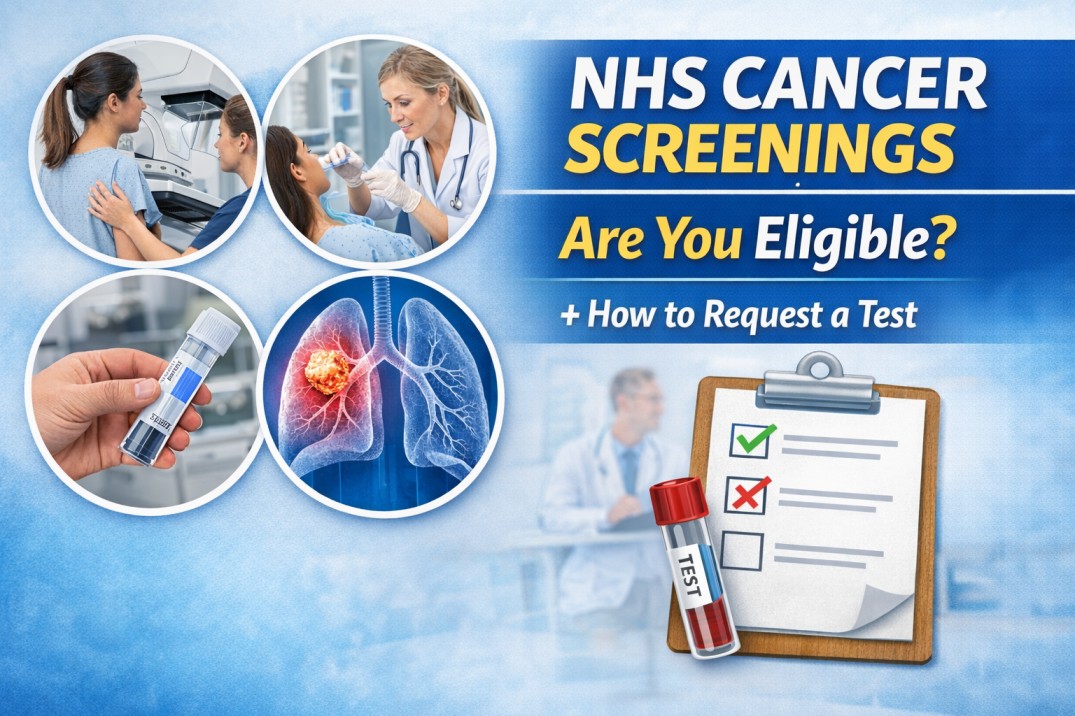
Cancer screening plays a vital role in saving lives through early detection and timely treatment. In the United Kingdom, the National Health Service (NHS) offers several free cancer screening programmes designed to identify early warning signs before symptoms appear. Understanding which screenings you are eligible forand how to request them can significantly improve long-term health outcomes.
This SEO-friendly and easy-to-understand guide explains the main NHS cancer screenings, eligibility criteria, benefits, and booking process, following Google’s quality and AdSense content guidelines.
Why Early Cancer Screening Matters
Cancer often develops silently in its early stages. Screening tests help doctors find abnormal cells or early cancer signs before noticeable symptoms begin.
Key benefits of screening include:
- Detecting cancer at an earlier, more treatable stage
- Increasing survival rates and treatment success
- Reducing the need for major surgery or aggressive therapy
- Providing peace of mind through regular health checks
Because of these advantages, health experts strongly encourage people to attend NHS screening invitations on time.
Main NHS Cancer Screening Programmes
The NHS currently runs three national screening programmes—breast, cervical, and bowel—along with targeted lung health checks and optional prostate testing after GP consultation.
1. Breast Cancer Screening
Eligibility
You may be invited for NHS breast screening if you are:
- A woman aged 50 to 71 in England (invited every 3 years)
- Over 71, where you can request screening yourself
- At higher genetic risk, meaning earlier or more frequent screening
What the Test Involves
Breast screening uses a mammogram, a low-dose X-ray that can detect very small tumours before they can be felt. The appointment usually lasts around 30 minutes, and results are sent by letter.
How to Request a Breast Screening Test
- Most eligible women receive an automatic NHS invitation
- If you miss your appointment, contact your local breast screening unit
- Women over 71 can self-refer by phone
Regular mammograms help reduce deaths from breast cancer by enabling earlier treatment.
2. Cervical Cancer Screening (Smear Test)
Eligibility
Cervical screening is offered to:
- Ages 25 to 49 – every 3 years
- Ages 50 to 64 – every 5 years
What the Test Checks
The smear test looks for human papillomavirus (HPV), the virus responsible for most cervical cancers. If HPV is detected, the sample is also examined for abnormal cell changes that may need treatment.
How to Book Cervical Screening
- The NHS sends a reminder letter when screening is due
- Book through your GP surgery or sexual health clinic
- You can request an appointment any time after missing screening
Cervical screening is highly effective because it can prevent cancer from developing, not just detect it early.
3. Bowel Cancer Screening
Eligibility
In England:
- Adults aged 54 to 74 receive a home testing kit every 2 years
- The programme is gradually expanding to include people aged 50 and over
- Higher-risk individuals may require additional monitoring or colonoscopy
What the Screening Involves
You complete a home stool test that checks for hidden blood, which may indicate early cancer or bowel polyps.
If the result is abnormal, you may be invited for a colonoscopy to examine the bowel more closely.
How to Request a Test Kit
- Kits are sent automatically by post
- If you do not receive one, contact the NHS bowel screening helpline
- Anyone with symptoms should see a GP immediately, regardless of age
Bowel screening can detect cancer before symptoms start, improving survival chances.
4. Lung Cancer Screening (Targeted Lung Health Checks)
Who May Qualify?
Targeted lung health checks are offered to people who:
- Are aged 55 to 74
- Smoke or previously smoked
- Live in areas where the programme is currently available
What the Check Includes
- A risk assessment questionnaire
- A low-dose CT scan for those at higher risk
These scans can identify lung cancer at a very early and treatable stage.
How to Access Lung Screening
- The NHS may send an invitation letter
- Your GP practice may contact you directly
- You can ask your GP about local availability
5. Prostate Cancer Testing in the NHS
The NHS does not run a national prostate screening programme because PSA testing can sometimes lead to unnecessary treatment.
However:
- Men aged 50+ can request a PSA blood test after discussing risks and benefits with a GP
- Higher-risk men (family history or Black ethnicity) may consider testing earlier
Speaking with a healthcare professional helps you make an informed decision.
What Happens After a Screening Test?
Most screening results are normal, meaning no cancer signs were found.
If results are unclear or abnormal:
- You may be invited for further diagnostic tests
- Doctors confirm whether cancer is present
- Early-stage cancers usually have simpler and more effective treatment
Importantly, an abnormal screening result does not always mean cancer.
Why Some People Miss Screening
Common reasons include:
- Fear of receiving bad news
- Embarrassment about the test
- Busy schedules or forgetting appointments
- Lack of awareness about eligibility
Healthcare professionals emphasize that attending screening is one of the best ways to protect your health.