
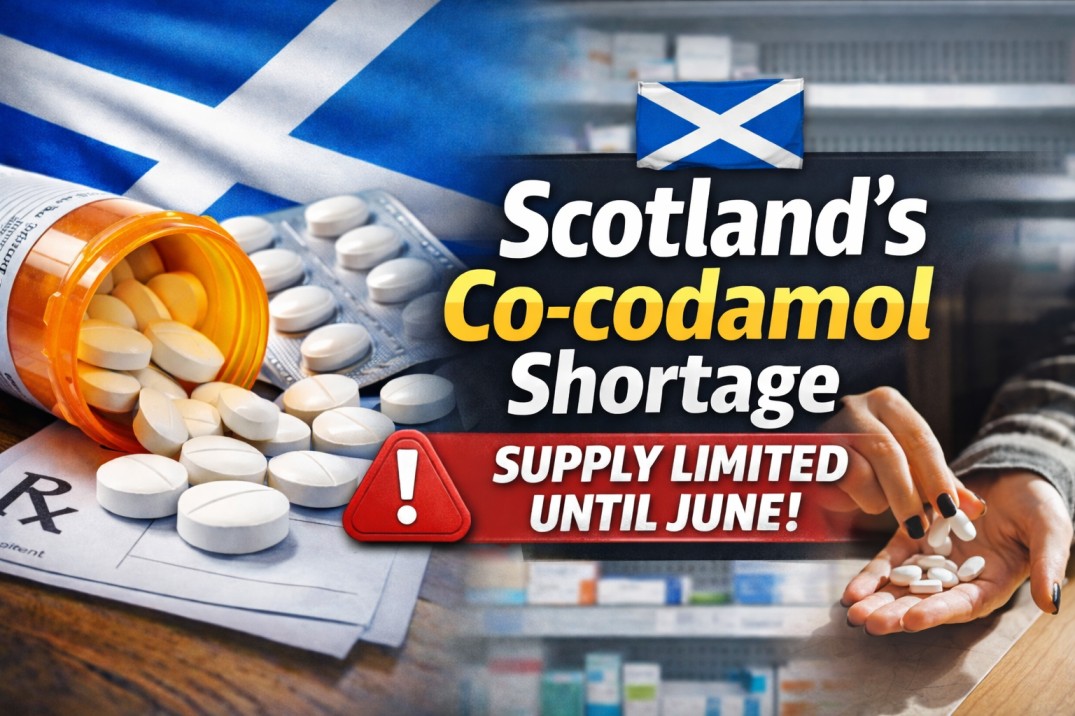
Patients across Scotland are being advised to prepare for temporary shortages of prescription co-codamol, a commonly used pain-relief medication. Health authorities have indicated that supply disruptions could continue until June, raising concerns among people who rely on the medicine for managing moderate to severe pain.
What Is Co-codamol and Why Is It Important?
Co-codamol is a combination painkiller that contains paracetamol and codeine. Doctors typically prescribe it when standard pain relievers such as paracetamol or ibuprofen alone are not strong enough.
It is widely used for:
- Post-surgery recovery
- Dental pain
- Musculoskeletal injuries
- Chronic pain conditions
Because it contains codeine, an opioid, co-codamol must be used carefully under medical supervision. Sudden shortages can therefore create anxiety for patients who depend on consistent dosing to manage pain safely.
Why Are Supplies Limited Until June?
Health officials have linked the shortage to manufacturing and distribution challenges affecting the wider pharmaceutical supply chain. Several factors may contribute:
1. Production Delays
Temporary manufacturing issues or reduced output at production facilities can limit the number of available doses.
2. Increased Demand
Higher-than-usual prescribing rates—especially during winter months when injuries and illnesses rise—can quickly deplete existing stock.
3. Global Supply Chain Pressures
Pharmaceutical ingredients are often sourced internationally. Transport delays, regulatory checks, or shortages of raw materials can all slow final delivery.
While shortages of medicines do occur periodically, authorities expect co-codamol availability to improve gradually by June.
How the Shortage May Affect Patients
Difficulty Filling Prescriptions
Some pharmacies may temporarily run out of certain strengths of co-codamol, meaning patients could need to visit multiple locations or wait for restocking.
Changes in Prescribed Medication
Doctors may recommend alternative pain relief to ensure patients continue receiving treatment without interruption.
Anxiety Around Pain Control
For people living with chronic pain, uncertainty about medication access can increase stress and discomfort. Clear communication with healthcare providers is essential during this period.
Safe Alternatives Doctors May Recommend
Patients should never switch medicines without medical advice, especially when opioids are involved. However, healthcare professionals may consider:
- Higher-dose paracetamol schedules (within safe limits)
- Non-steroidal anti-inflammatory drugs (NSAIDs) such as ibuprofen
- Different combination painkillers
- Short-term alternative opioids in carefully monitored cases
- Non-drug therapies like physiotherapy or heat treatment
The right option depends on a patient’s medical history, pain severity, and current medications.
Guidance for Patients Currently Taking Co-codamol
If you rely on prescription co-codamol, consider the following steps:
1. Do Not Stockpile
Ordering extra medicine “just in case” can worsen shortages for others who need it urgently.
2. Request Prescriptions Early
Contact your GP or pharmacy several days before your medication runs out to allow time for sourcing alternatives if needed.
3. Follow Dosage Instructions Strictly
Because co-codamol contains paracetamol and codeine, exceeding recommended doses can cause serious liver damage or dependence.
4. Speak Openly With Healthcare Providers
If pain control worsens or medication becomes unavailable, your doctor can adjust treatment safely.
What Pharmacists and Health Services Are Doing
Healthcare providers are actively working to reduce the impact of the shortage. Measures may include:
- Monitoring national medicine stock levels
- Prioritizing supply for patients with the greatest clinical need
- Recommending safe substitute medications
- Communicating updates to clinics and pharmacies
Such coordinated action helps ensure patient safety even during temporary disruptions.
The Bigger Picture: Medicine Shortages in Modern Healthcare
Shortages like this highlight broader challenges in global healthcare systems:
- Heavy reliance on international manufacturing
- Rising demand for pain management treatments
- Regulatory and quality-control requirements slowing production
- Limited redundancy in pharmaceutical supply chains
Governments and health organizations worldwide are exploring local manufacturing, improved forecasting, and diversified suppliers to prevent similar issues in the future.
When to Seek Urgent Medical Help
Patients should contact a healthcare professional immediately if they experience:
- Severe uncontrolled pain
- Signs of opioid withdrawal
- Accidental overdose symptoms (extreme drowsiness, confusion, breathing difficulty)
- Yellowing of skin or eyes, which may indicate liver problems
Prompt medical care can prevent serious complications.
Looking Ahead to June and Beyond
Current guidance suggests that co-codamol supplies should gradually stabilize by June, though timelines can shift depending on manufacturing progress and demand.
In the meantime, staying informed, following professional advice, and avoiding unsafe self-medication are the best ways to manage pain effectively.
Conclusion
The temporary limitation of prescription co-codamol in Scotland is a reminder of how interconnected modern medicine supply chains have become. While the shortage may cause inconvenience or concern, healthcare professionals are providing alternatives and support to ensure patients continue receiving safe pain relief.
If you or a loved one depend on co-codamol, maintain regular contact with your GP or pharmacist, follow dosing guidance carefully, and remain alert for official updates. With coordinated healthcare efforts and expected supply recovery by June, the situation is likely to improve in the coming months.