
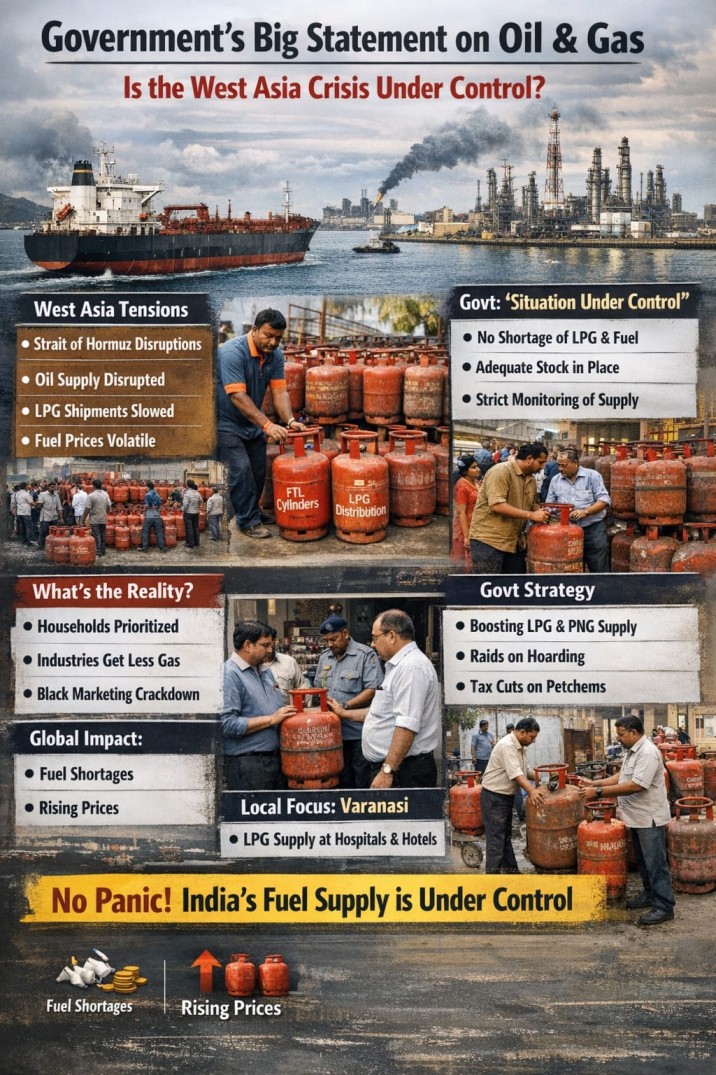
The ongoing geopolitical tensions in West Asia—especially linked to the Iran conflict—have raised serious concerns worldwide. Countries heavily dependent on oil imports, including India, are closely monitoring the situation. Amid rising fears of fuel shortages, the Government of India has issued a strong and reassuring statement: the crisis is under control, and energy supplies remain stable.
But what does this really mean? Is there actually no shortage? Why are LPG and small cylinders (FTL cylinders) suddenly in the spotlight?
Let’s break everything down in a simple, clear, and fact-based way.
What Triggered the Oil & Gas Crisis?
The root of the crisis lies in the West Asia conflict, particularly disruptions around the Strait of Hormuz—a critical route through which nearly 20% of the world’s oil supply passes.
Due to rising tensions and restricted tanker movement:
1 Oil supply chains were disrupted
2 LPG shipments slowed down
3 Global fuel prices became volatile
India, which imports a large share of its oil and LPG from this region, naturally felt the pressure.
Government’s Big Statement: “Situation Under Control
The Indian government has clearly stated that:
No major disruption in LPG, petrol, or diesel supply
Adequate stock and distribution systems are in place
Strict monitoring is being done to prevent panic
Oil companies have also confirmed that FTL (Free Trade LPG) cylinders and regular LPG supplies are continuing smoothly.
The Tribune
At the same time, authorities have warned states to stop rumors and misinformation, which can lead to panic buying and hoarding.
The Times of India
In simple words:
Supply is stable, but fear and misinformation are bigger problems right now.
What Are FTL Cylinders & Why Are They Important?
FTL (Free Trade LPG) cylinders are 5 kg small gas cylinders, mainly used by:
Migrant workers
Small vendors
Low-income households
During this crisis, the government has heavily pushed their distribution.
Key Data:
Over 5 lakh FTL cylinders sold since March 2026
Press Information Bureau
More than 67,000–71,000 cylinders sold daily
Press Information Bureau +1
Why this matters:
Ensures affordable cooking fuel access
Reduces pressure on large LPG cylinders
Prevents black marketing
This is a targeted welfare + crisis management strategy
LPG Supply: Real Situation vs Public Fear
Let’s understand the actual ground reality:
What’s stable:
Domestic LPG supply is fully maintained
CNG and PNG supply prioritized at 100% levels
Press Information Bureau
Urban gas pipelines expanding rapidly
What’s affected:
Commercial LPG supply temporarily reduced
Industries receiving ~70% of pre-crisis supply
Press Information Bureau
What caused panic:
Black marketing incidents
Hoarding of cylinders
Social media rumors
In fact, authorities even seized hundreds of illegally stored cylinders during raids. �
Reuters
Conclusion:
Shortage is localized and temporary—not a national crisis.
Why Industries Are Getting Less Gas
The government has clearly prioritized household consumption over industrial use.
Industries like:
Steel
Textile
Chemicals
are receiving limited LPG supply because:
LPG is diverted to domestic use
Alternatives like PNG are being promoted
This is a strategic decision to protect common citizens first
Government’s Multi-Level Strategy
To control the situation, India is using a
multi-layered approach:
- Increasing LPG Distribution
Rapid supply of domestic cylinders
Boost in FTL cylinder availability - Expanding PNG (Piped Natural Gas)
Encouraging hotels, industries to shift
Faster approvals for gas pipelines - Cracking Down on Black Marketing
Raids across cities
Strict monitoring of distributors - Import & Trade Adjustments
Removing taxes on petrochemicals
Exploring alternative fuel sources - Public Communication
States told to stop rumors
Helplines and updates for consumers Global Impact: Why This Crisis Matters
This is not just India’s problem—it’s global.
Countries across Asia are facing:
Fuel shortages
Price hikes
Economic pressure
Some nations have even declared energy emergencies.
Experts say this could be the biggest oil disruption since the 1970s crisis.
Local Impact Example: Varanasi
Even at the city level, the government is active..
In
Varanasi:
Officials ensured continuous LPG supply
Oil companies were instructed to avoid delays
Special focus on hospitals, hotels, and
institutions
Final Conclusion
The West Asia crisis is serious, but India’s response has been fast, structured, and controlled.
Domestic LPG supply is stable
FTL cylinders are ensuring last-mile delivery
Industries are temporarily sacrificing Government is actively preventing panic
The biggest takeaway:
There is no need to panic—India’s fuel system is under control, but responsible public behavior is equally importan