
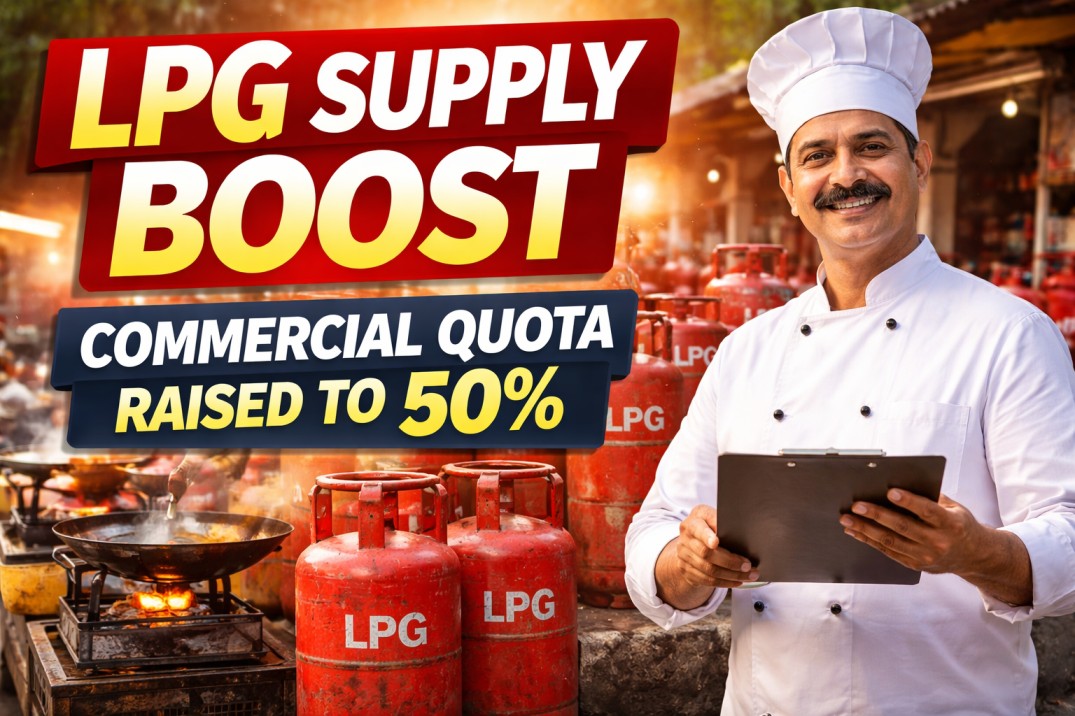
Centre Raises Commercial LPG Allocation to 50% as Supply Stabilises: Real Relief for Businesses Across India
In a much-needed move that signals stability in India’s energy supply, the central government has increased the allocation of commercial LPG to 50%. This decision comes at a time when supply conditions are improving after months of uncertainty, offering real relief to businesses that depend heavily on LPG.
From small roadside food stalls to large hotel chains, the impact of this policy shift is expected to be immediate and meaningful. But what does this really mean on the ground? Let’s break it down in a simple and realistic way.
The Real Problem Businesses Were
Over the past year, many businesses across India struggled with inconsistent LPG supply. Commercial cylinders were often delayed or unavailable, forcing business owners to either pause operations or switch to costly alternatives.
Street vendors and small restaurant owners were among the hardest hit. In cities and small towns alike, people reported waiting days for cylinder refills.
For many, this wasn’t just an inconvenience — it directly affected daily income.
What Has Changed Now?
With supply conditions finally stabilizing, the government has increased the share of LPG allocated for commercial use to 50%.
This means:
- More commercial cylinders in the market
- Faster delivery and fewer delays
- Less dependency on backup fuels
This change didn’t happen overnight. It’s the result of improved import planning, better logistics, and a more stable global energy market.
Ground-Level Impact: What Businesses Are Saying
For restaurant owners, this is a big relief.
Many small food business operators have already started noticing better availability of LPG cylinders. Delivery times are improving, and panic buying has reduced.
Real Impact:
- Food stalls can operate without interruption
- Hotels can manage peak hours smoothly
- Cloud kitchens can scale operations again
Even local tea sellers and street vendors — who form the backbone of India’s informal economy — are benefiting from this move.
Small Industries Finally Get Stability
It’s not just food businesses. Many small industries rely on LPG for production processes.
These include:
- Bakeries
- Food processing units
- Textile dyeing businesses
- Small manufacturing workshops
Earlier, inconsistent LPG supply led to production delays and financial losses. Now, with improved allocation, these businesses can plan better and operate more efficiently.
The Big Question: Will Prices Come Down?
Let’s be honest — this is what everyone wants to know.
While increased supply helps reduce pressure, LPG prices depend on global crude oil rates, import costs, and currency fluctuations.
So, prices may not drop immediately.
However, what will improve is price stability. Sudden spikes and extreme fluctuations are likely to reduce, which is equally important for businesses trying to manage costs.
What About Household LPG Users?
A natural concern is whether this move will affect domestic LPG availability.
The answer is reassuring.
The government has maintained that domestic supply remains protected. The increase in commercial allocation has been made possible only because overall supply has improved.
So, households are unlikely to face shortages.
Why Supply Is Finally Stabilising
This improvement isn’t just happening in India — it’s part of a global trend.
After a period of uncertainty caused by geopolitical tensions and supply chain disruptions, energy markets are now stabilizing.
Key Reasons:
- Better global crude oil production
- Improved shipping and logistics
- Strategic energy planning by importing countries like India
India has also strengthened its storage and distribution systems, which is helping ensure smoother supply across regions.
Behind the Scenes: Infrastructure Improvements
One major reason for this positive change is better infrastructure.
The government has been working on:
- Expanding LPG storage capacity
- Improving delivery networks
- Using technology for supply tracking
These upgrades may not be visible to consumers directly, but they play a crucial role in ensuring that cylinders reach customers on time.
Economic Boost: Why This Matters for India
This decision is not just about LPG — it’s about economic growth.
When businesses get reliable fuel supply:
- Productivity increases
- Costs become predictable
- Employment opportunities grow
Small and medium businesses (SMEs), which are the backbone of India’s economy, benefit the most.
What Happens Next?
Looking ahead, this move could be the beginning of a more stable energy ecosystem in India.
The government is also exploring alternatives like:
- Ethanol blending
- Bio-LPG
- Cleaner energy solutions
While LPG remains essential, diversification will help reduce future risk