
Introduction
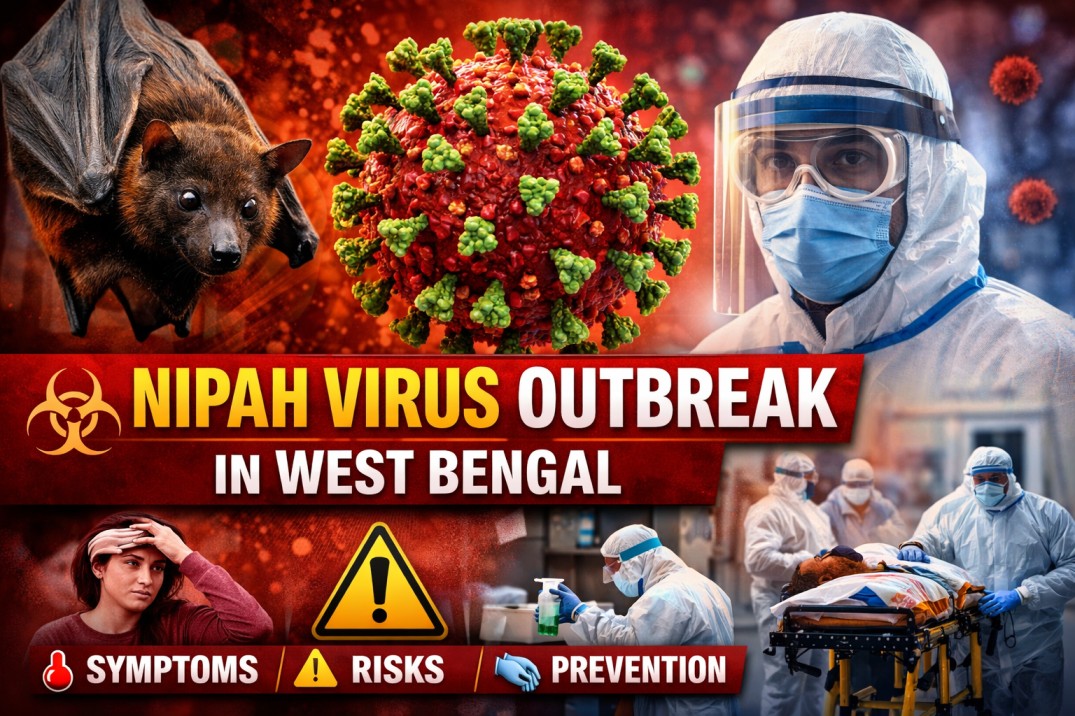
The recent concerns around a Nipah virus outbreak in West Bengal have drawn national attention due to the virus’s high fatality rate and its potential to spread through human-to-human contact. Nipah virus (NiV) is a zoonotic disease, meaning it can spread from animals to humans, and has been classified as a priority pathogen by global health authorities.
This article provides a clear, factual, and easy-to-understand overview of the Nipah virus outbreak in West Bengal, including its causes, symptoms, transmission methods, preventive measures, and the steps taken by health authorities to control its spread.
What Is the Nipah Virus?
Nipah virus is a rare but dangerous viral infection that was first identified in 1999 during an outbreak in Malaysia. The virus primarily spreads from fruit bats (Pteropus species) to humans and can also transmit through contaminated food or direct contact with infected individuals.
Due to its ability to cause severe respiratory illness and encephalitis (brain inflammation), Nipah virus outbreaks are considered serious public health emergencies.
Nipah Virus Outbreak in West Bengal: An Overview
West Bengal has previously reported isolated Nipah virus cases, making the state a sensitive surveillance zone. Whenever suspected cases emerge, health authorities activate rapid response protocols, including:
- Isolation of suspected patients
- Contact tracing
- Testing and monitoring
- Public health advisories
How Does Nipah Virus Spread?
Understanding transmission is key to prevention. The Nipah virus spreads through:
1. Animal-to-Human Transmission
- Consumption of fruits contaminated by bat saliva or urine
- Drinking raw date palm sap exposed to fruit bats
2. Human-to-Human Transmission
- Close contact with infected individuals
- Exposure to bodily fluids such as saliva, blood, or respiratory droplets
3. Healthcare-Related Exposure
- Inadequate infection control practices
- Direct contact with infected patients without protective equipment
Common Symptoms of Nipah Virus Infection
Symptoms usually appear 5–14 days after exposure, though the incubation period may vary.
Early Symptoms
- Fever
- Headache
- Muscle pain
- Sore throat
- Vomiting
Severe Symptoms
- Breathing difficulty
- Dizziness
- Altered consciousness
- Seizures
- Encephalitis (brain swelling)
In severe cases, Nipah infection can progress rapidly and become life-threatening.
Why Is Nipah Virus So Dangerous?
The Nipah virus is considered dangerous due to several factors:
- High fatality rate compared to most viral infections
- No specific antiviral treatment currently available
- No approved vaccine for humans
- Ability to spread through close human contact
- Risk of overwhelming healthcare systems
Because of these risks, early detection and prevention remain the most effective defense.
Preventive Measures for Nipah Virus
For the General Public
- Avoid consuming partially eaten or fallen fruits
- Do not drink raw or unprocessed date palm sap
- Maintain hand hygiene
- Avoid contact with people showing flu-like or neurological symptoms
For Healthcare Workers
- Use personal protective equipment (PPE)
- Follow strict infection control protocols
- Isolate suspected patients immediately
Community-Level Prevention
- Public awareness campaigns
- Surveillance in high-risk districts
- Reporting symptoms early to health authorities
Government and Health Authority Response
When a Nipah virus case is suspected in West Bengal, authorities typically implement:
- Rapid testing and laboratory confirmation
- Contact tracing and quarantine measures
- Temporary restrictions in affected areas
- Health advisories and awareness campaigns
These steps help contain the virus quickly and prevent community spread.
Nipah Virus vs Other Viral Outbreaks
Unlike common viral illnesses, Nipah virus outbreaks are:
- Less frequent but more severe
- Harder to treat due to lack of medication
- More dependent on preventive public behavior
This makes accurate information and responsible reporting essential.
Importance of Public Awareness
Misinformation during outbreaks can cause panic. Reliable, fact-based awareness helps:
- Reduce fear
- Encourage early medical attention
- Prevent unsafe practices
- Support health workers
Staying informed through trusted sources is critical during any outbreak.
Conclusion
The Nipah virus outbreak in West Bengal highlights the importance of vigilance, hygiene, and early reporting of symptoms. While the virus is rare, its impact can be severe if not controlled quickly.
With timely action by health authorities and responsible behavior from the public, Nipah virus outbreaks can be effectively managed. Awareness, prevention, and cooperation remain the strongest tools in protecting public health.